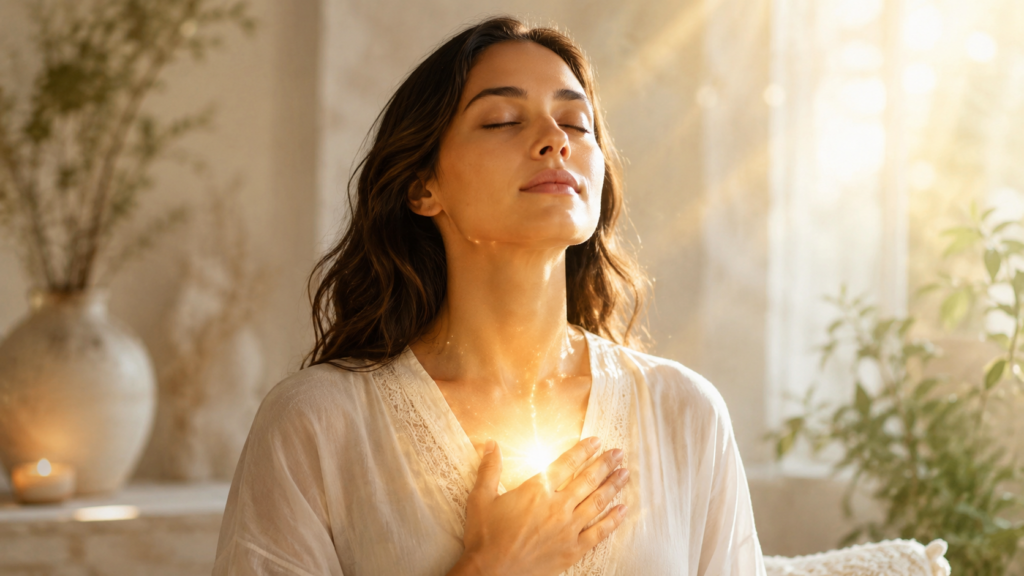
One of the greatest gifts we receive in life is something we often take for granted: our breath. Every breath sustains the body, but it can also become an invitation to pause, return to the present moment, and reconnect with a deeper sense of peace.
When life feels stressful or uncertain, the mind can become crowded with worry. The body may feel tense, attention may scatter, and breathing may become quicker or shallower. In those moments, deliberately slowing down can create a small but meaningful space between what you are feeling and how you choose to respond.
For people drawn to spiritual wellness, energy healing for inner peace can complement that pause. A calm healing environment, quiet reflection, and mindful breathing may help you become more aware of your body, your emotions, and the inner stillness that can be difficult to notice during a busy day.
The goal is not to pretend that stress, fear, or uncertainty do not exist. It is to remember that they do not have to occupy every part of your attention. Sometimes the first step back toward balance is simply one intentional breath.
Contents
- 1 How Your Breath Reflects Your Inner State
- 2 How Deep Breathing Creates Space for Inner Peace
- 3 Breathing In Peace and Releasing What No Longer Serves You
- 4 How Energy Healing Can Support Inner Peace
- 5 Finding Clarity Through Stillness
- 6 Connecting Breath With Divine Peace
- 7 A Simple Mindful Breathing Practice for Daily Peace
- 8 Carrying Peace Beyond an Energy Healing Session
- 9 Final Reflection: Every Breath Is a New Beginning
- 10 Important Wellness Note
- 11 Frequently Asked Questions
- 11.1 Can deep breathing help me feel calmer?
- 11.2 How does energy healing support inner peace?
- 11.3 Can breathing be used during an energy healing session?
- 11.4 What is the connection between breathing and Divine peace?
- 11.5 How often should I practice mindful breathing?
- 11.6 When should I consider an energy healing session?
How Your Breath Reflects Your Inner State
Your breathing often mirrors what is happening within you. When you feel safe and relaxed, breathing may become slower and easier.
 When you feel fearful, rushed, or overwhelmed, you may notice shorter breaths, tightness through the chest, tension in the shoulders or jaw, racing thoughts, or difficulty settling down.
This does not mean every change in breathing has an emotional cause. It does mean that the breath can become a useful point of awareness. Noticing it gives you something immediate and simple to observe without judging yourself.
Stress responses can include changes in breathing rate and muscle tension. The National Center for Complementary and Integrative Health explains how stress can increase breathing rate and muscle tension, while relaxation techniques are intended to encourage a calmer state.
During an energy healing session, this awareness can become part of the experience. As the room becomes quiet and the body settles, many people find themselves breathing more comfortably and noticing the present moment more clearly.
How Deep Breathing Creates Space for Inner Peace
When life feels overwhelming, peace can seem far away. Yet an intentional breath can create a brief pause. That pause may be only a few seconds, but it can interrupt the momentum of worry and give your attention somewhere steady to return.
Slow breathing is commonly used in relaxation and contemplative practices. Research has also examined slow breathing for reducing psychological stress, and broader reviews have explored breathing practices for stress and anxiety reduction. These practices should be understood as supportive wellness tools rather than replacements for medical or mental health care.
In an energy healing setting, intentional breathing may support a feeling of stillness. Some people describe a quieter mind, less physical tension, greater emotional balance, renewed hope, or a stronger awareness of the present moment.
Whether you understand this as Divine peace, spiritual connection, mindful awareness, or simply allowing yourself to rest, slowing down can create room for a different inner experience than the one produced by constant mental activity.
Breathing In Peace and Releasing What No Longer Serves You
Breathing can also become a meaningful symbol of letting go. You do not have to force yourself to feel different. Instead, you can use each breath as a gentle reminder that you are allowed to release some of what you have been carrying.
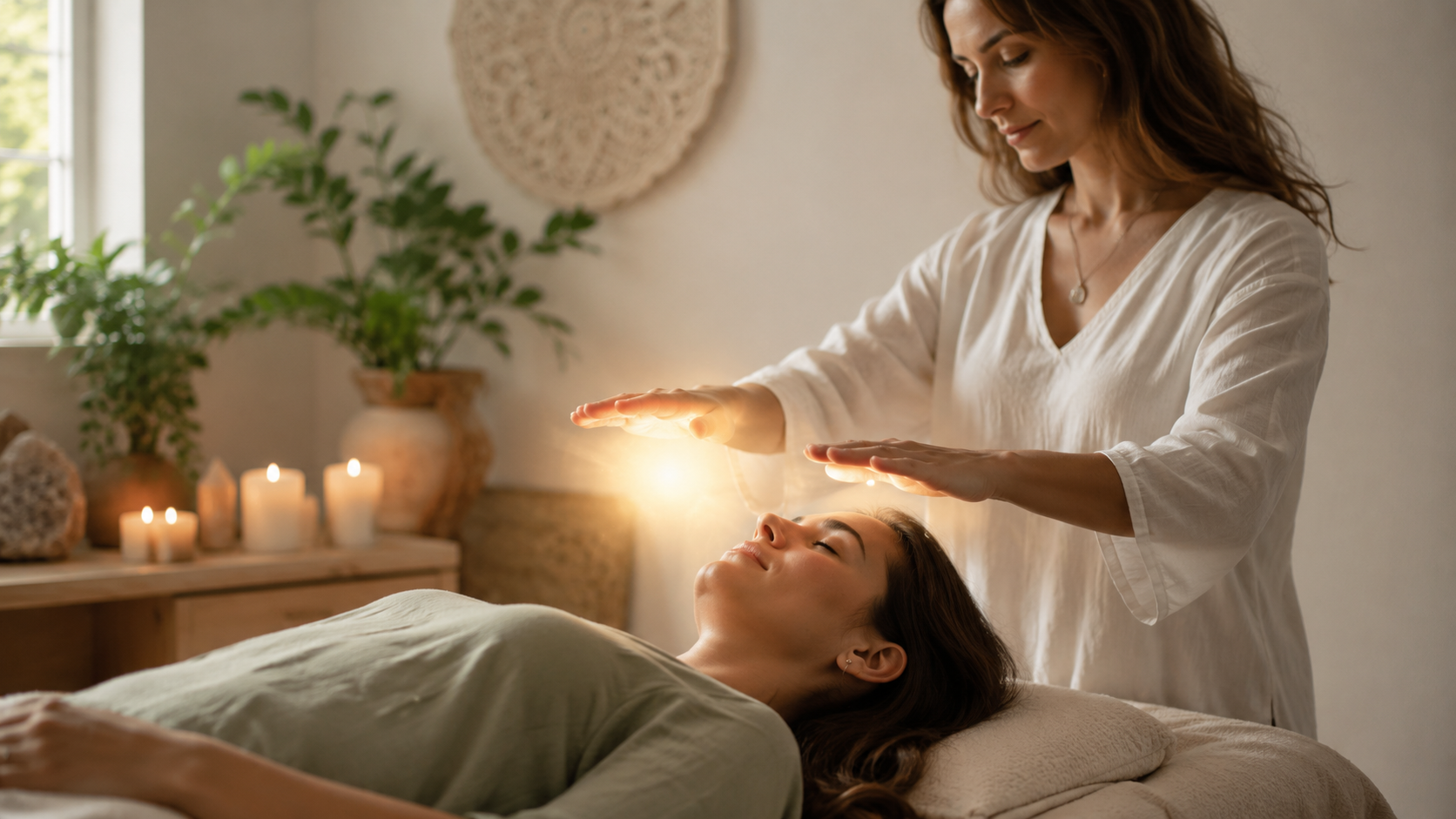
With each slow exhale, you might imagine releasing:
- Fear and unnecessary worry
- Anger or resentment
- Emotional heaviness
- Self-doubt
- The pressure to control every outcome
With each comfortable inhale, you might intentionally welcome:
- Peace
- Courage
- Hope
- Gratitude
- Clarity
- Compassion
These shifts are not automatic, and breathing does not erase difficult circumstances. The value of the practice is in returning your attention to qualities you want to cultivate. Over time, combining intentional breathing with reflection, meditation, or energy healing practices for daily stress relief may help make that return feel more natural.
How Energy Healing Can Support Inner Peace
An energy healer does not place peace inside you. Rather, the healer helps create an environment where your own capacity for peace may become easier to recognize.
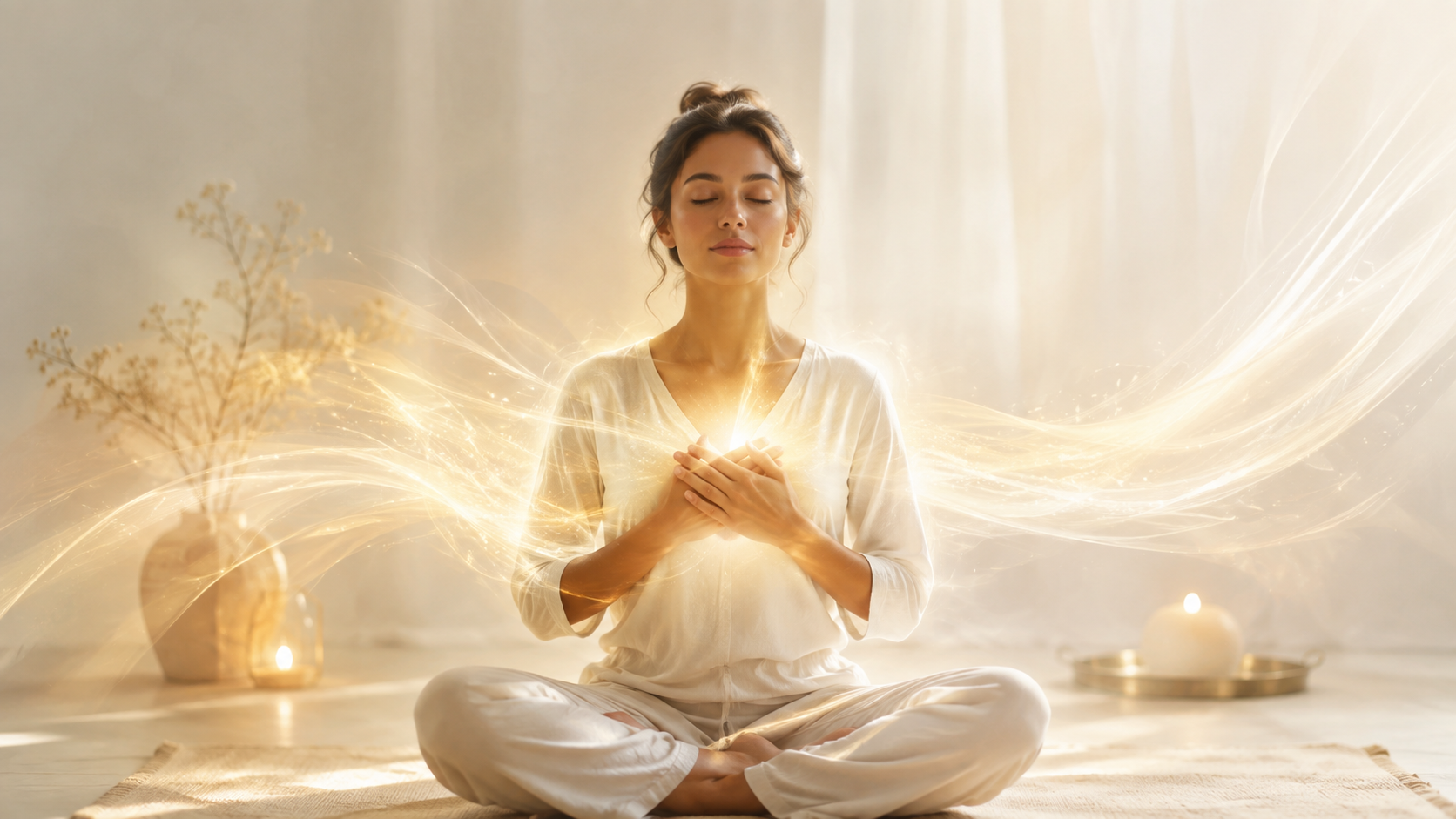
Through a calm presence and supportive spiritual practices, an energy healing session may encourage you to slow down, notice your breathing, become aware of physical or emotional tension, and reconnect with a more grounded state.
Yrma Wilson offers a range of energy healing services for people who want a dedicated space for spiritual reflection, energetic balance, and inner awareness. Depending on what feels aligned with you, this may include a Reiki Energy Healing session or another approach to energy work.
The purpose of the session is not to guarantee that anxious thoughts disappear. It is to support a calmer setting where you can notice those thoughts without allowing every one of them to determine your next action.
If you are new to this work and want to understand different approaches first, Yrma’s guide to Types of Energy Healing can help you explore the practices used in spiritual energy work.
Finding Clarity Through Stillness
When the mind is filled with constant activity, it becomes difficult to recognize what you genuinely think, feel, or need.
The mind may keep returning to the same questions, replaying the same fears, or trying to solve several problems at once.
Stillness gives those thoughts room to settle. It does not guarantee an immediate answer, but it can make thoughtful reflection easier. A few quiet breaths may help you see a challenge from a different perspective, respond instead of react, or recognize an option that was difficult to notice while you felt overwhelmed.
Quieting Mental Noise
You do not have to force the mind to become completely silent. In fact, trying to stop every thought can create more frustration. A gentler approach is to notice the thought, return your attention to your breath, and allow the thought to pass without following it into another cycle of worry.
When this practice is repeated, the breath becomes an anchor. You can return to it whenever attention becomes scattered.
Reconnecting With Inner Wisdom
Many spiritual traditions describe a deeper form of guidance that becomes easier to recognize when the mind is quiet. You may call this intuition, inner wisdom, your Higher Self, Divine guidance, or simply a clearer understanding of what matters to you.
Energy healing and stillness can create time for that reflection. Rather than demanding an answer, you create space for clarity to emerge at its own pace.
Connecting Breath With Divine Peace
For many people, breathing is more than a relaxation practice. It can also become a spiritual ritual.
An inhale can remind you that life continues to move through you. An exhale can remind you that you do not have to carry every fear forever. The space between breaths can become a moment of prayer, gratitude, surrender, or awareness.
Some people experience this as a connection with God, Divine Source, Universal Consciousness, Infinite Intelligence, or Divine Light. Others may simply experience a sense of quiet presence. The language can be personal. What matters is that the practice brings you back to a state in which compassion, gratitude, hope, and peace have room to be felt.
If spiritual energy practices are new to you, Yrma’s article explaining what Reiki is and how it works offers additional context for understanding energy healing as a complementary spiritual wellness practice.
A Simple Mindful Breathing Practice for Daily Peace
You do not need a complicated technique to create a mindful pause. The following practice is designed to be gentle and simple. If deep breathing ever makes you uncomfortable, lightheaded, or unwell, return to your normal breathing and seek appropriate medical guidance if needed.
Pause and Become Present
Find a comfortable position. Allow your shoulders and jaw to soften. Notice how you are breathing without immediately trying to change it.
Ask yourself: What am I feeling right now? Where am I holding tension? What is asking for my attention?
Inhale With Intention
Take a comfortable, unforced breath in. As you inhale, choose a quality you would like to welcome into the moment. It might be peace, courage, patience, clarity, gratitude, or compassion.
You can silently repeat a simple phrase such as, “I welcome peace into this moment.”
Exhale What You Are Ready to Release
Let the breath leave naturally. As you exhale, imagine loosening your grip on one thing that does not need to control this moment.
You might silently say, “I release what I cannot control,” or, “I let this moment become lighter.”
Return Your Attention to the Present Moment
Repeat for a few comfortable breaths. There is no need to chase a particular sensation or spiritual experience. The purpose is simply to return to yourself.
For more gentle practices that can complement this routine, Yrma’s guide to energy healing exercises includes additional ways to bring awareness and energy work into daily life.
Carrying Peace Beyond an Energy Healing Session
One of the most valuable reminders from energy healing is that peace does not have to remain inside a treatment room.
The session can become a place where you rediscover a calmer state, but the practice of returning to that state belongs to you.
When a difficult conversation, uncertain situation, or busy day begins to pull you away from yourself, pause before reacting. Notice your breath. Relax what you can. Give yourself a few seconds to become present.
You may not be able to change the situation immediately, but you can change the quality of attention you bring to it.
If worry and anxious feelings are a recurring part of your spiritual wellness concerns, Yrma also has a related resource on energy healing for anxiety. Remember that persistent or severe anxiety should also be discussed with a qualified healthcare or mental health professional.
Final Reflection: Every Breath Is a New Beginning
Every breath offers another beginning.
Every comfortable inhale can remind you that life continues to offer hope. Every gentle exhale can become an opportunity to loosen your hold on fear, tension, or emotional heaviness.
Energy healing for inner peace is not about escaping every difficult thought or creating a life without uncertainty. It is about making room for stillness, awareness, and spiritual connection so that fear does not have to speak louder than everything else within you.
An experienced energy healer can offer a dedicated space to slow down and reconnect with the inner resilience that can be difficult to hear during stressful periods. The breath then becomes something you can carry with you long after the session ends.
Take one slow, comfortable breath. Release what no longer needs your attention in this moment. Welcome the peace that is available now.
If you feel ready to create more space for stillness and energetic balance, you can book a Reiki Energy Healing session with Yrma Wilson.
Important Wellness Note
Energy healing is a complementary spiritual wellness practice. It should not replace medical, psychological, or emergency care. Breathing practices should feel comfortable and should never be forced. If you experience persistent anxiety, breathing difficulty, chest pain, severe distress, or other concerning symptoms, seek appropriate professional care.
Frequently Asked Questions
Can deep breathing help me feel calmer?
Gentle, intentional breathing is commonly used in relaxation and mindfulness practices. It may help some people slow down and feel more present. It should be comfortable rather than forced, and it is not a substitute for professional treatment when anxiety or physical symptoms are persistent or severe.
How does energy healing support inner peace?
Energy healing may provide a calm environment for relaxation, reflection, emotional awareness, and spiritual connection. The practitioner does not create peace for you. The session is intended to support conditions in which your own sense of stillness and balance can become easier to notice.
Can breathing be used during an energy healing session?
Yes. Natural, comfortable breathing can be used as a point of awareness during a session. Some people find that noticing the breath helps them remain present as the body and mind settle.
What is the connection between breathing and Divine peace?
In spiritual practice, the breath can serve as a symbol of life, presence, surrender, and renewal. Some people use each breath as a moment to reconnect with God, Divine Source, Universal Consciousness, or their own inner spiritual awareness.
How often should I practice mindful breathing?
There is no single schedule that is right for everyone. You can use a few comfortable breaths whenever you need a pause, such as before a difficult conversation, during a stressful day, or while preparing for prayer, meditation, or an energy healing session.
When should I consider an energy healing session?
You may consider a session when you want dedicated time for relaxation, spiritual reflection, energetic balance, or reconnecting with inner peace. Energy healing can complement other wellness practices, but it should not replace appropriate medical or mental health support.